










STREET
DANCE
HISTORY
STREET DANCE HISTORY
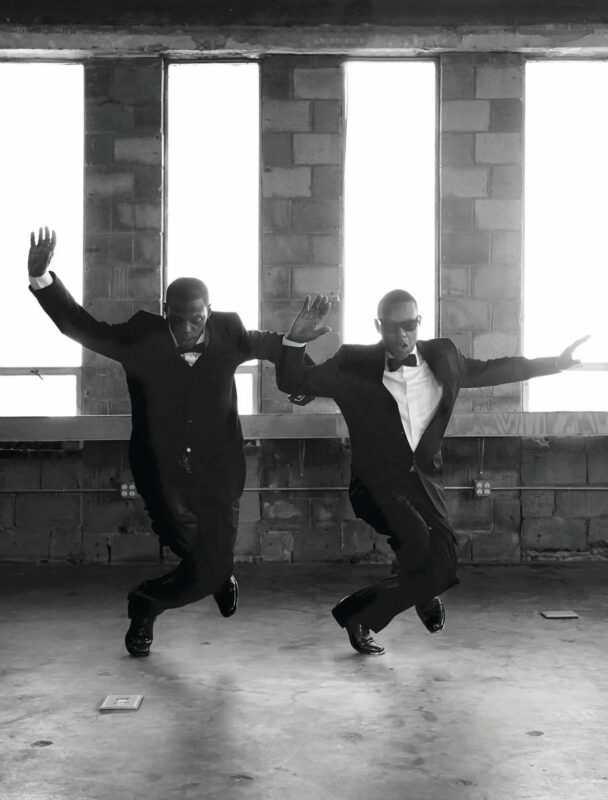
Street Dance, as a form of cultural expression, encompasses an array of styles rooted deeply in Black and Brown communities across America. Recognized as an umbrella term, “Street Dance” encompasses a broad spectrum of movement practices that originated outside traditional dance studios and formal institutions, instead blossoming within community spaces such as parks, block parties, clubs, school yards, and talent shows. These environments became vital hubs where creativity, social bonding, political expression, and cultural identity coalesced, fostering styles that continue to influence dance and culture worldwide.
The origins of Street Dance are embedded in the social and political histories of marginalized communities. It is a testament to resilience and ingenuity that, without the support of mainstream institutions, communities crafted expressive dance forms to articulate their lived experiences. The term “Street Dance,” is a euphemism for community dance; specifically, it refers not to movement on physical streets but to the neighborhoods and social spaces in which these styles developed. Take note that when referring to the streets, its in reference to the community or neighborhood, not the actual street. This linguistic framing underscores Street Dance’s role as an embodied cultural archive—an enduring repository of Black and Brown histories, struggles, joys, and resistance.
Fundamentally, Street Dance functions as an umbrella term that encompasses a variety of styles developed across generations. Styles such as Popping, Campbell Locking, Boogaloo, House, Whacking, Vogueing, Krumping, and many others fall under this broad categorization. Each style reflects unique movement vocabularies and aesthetic principles, yet all share a common origin rooted in community experimentation and improvisation. These dances are characterized by their improvisational nature, allowing practitioners to express individuality and emotional depth while honoring communal norms and stylistic conventions. This duality of personal expression within collective frameworks exemplifies the social fabric of Street Dance.
Thomas F. DeFrantz, a renowned dance scholar, eloquently describes Street Dance as “embodied archives of Black life,” emphasizing how these dances carry histories, struggles, and cultural milestones within their movements. They are living records—embodying stories of resistance against oppression, joy in communal celebrations, and resilience in the face of adversity. Such styles were created primarily by Black and Brown communities within select social spaces, functions deeply intertwined with music, language, and social customs. These dances serve as cultural practices that elevate community voice, challenging mainstream narratives and asserting cultural sovereignty.
A crucial distinction must be made regarding “Hip-hop dance.” While it is often mistakenly used interchangeably with Street Dance, Hip-hop dance is, in fact, a specific style emerging within the Hip-hop cultural movement in the late 20th century. It is one of many styles under the Street Dance umbrella but not synonymous with all Street Dance forms. Hip-hop dance derives from Hip-hop music — and has developed its own unique vocabulary and aesthetic. It embodies the political ethos of Hip-hop—resistance, empowerment, and community-building—while also serving as a mode of self-expression and identity assertion.
The political embodiment of Street Dance cannot be overstated. Emerging from marginalized communities, these dance styles have historically been acts of resistance against systemic oppression and cultural suppression. From the Breaking battles in Bronx streets to the Voguing balls in Harlem, Street Dance has been a space where Black and Brown communities challenge stereotypes, reclaim space, and articulate their narratives on their own terms. This politicization is embedded within the movements themselves—their rhythms, battles, cyphers and collective participation—making Street Dance a form of embodied resistance. It is both a cultural expression and a political statement, asserting agency in spaces often marked by exclusion.
Moreover, the styles under the umbrella of Street Dance often span multiple musical genres beyond Hip-hop music itself. They draw from funk, disco, house, and R&B—genres that predate Hip-hop and were integral to the social spaces that birthed these dances. For example, dance styles like House evolved from Disco club scenes that experimented with rhythm, movement, and community cohesion, serving as cultural responses to and affirmations of identity and resistance. These musical genres and their associated dances provided lived-in spaces of Black and Brown youth who forged identities, built community, and challenged racial and economic marginalization.
Language and aesthetics associated with Street Dance reflect its political and cultural embodiment. Terms like “crew,” “battle,” “cypher,” and “freestyle” communicate collective identity, resistance, and collective bargaining. These practices are rooted in cultural storytelling, often serving as a means of social commentary and defiance. For example, Vogueing, with its history rooted in Black and Latino LGBTQ+ communities, became a form of self-empowerment and political defiance against marginalization. Krumping emerged as an emotionally raw spiritual dance form expressing personal and communal struggles, reclaiming agency through movement. K.R.U.M.P is an acronym for Kingdom, Radically Uplifted Mighty Praise.
The development of Street Dance styles was driven largely by Black and Brown communities as an act of cultural sovereignty and social navigation. Operating outside the confines of formal institutions, these communities cultivated dances that served multiple functions—social bonding, cultural preservation, entertainment, celebration of life, death and political resistance. These dance forms became embodied archives challenging stereotypes and asserting visibility within a racially and economically stratified society.
Importantly, scholars like Jacqui Malone emphasize that Street Dance styles are not merely technical or aesthetic practices but are deeply intertwined with cultural practices, social customs, and music. Malone highlights that these dances are as much about community and language as they are about movement, serving as spaces where identity, political consciousness, and cultural memory are expressed and perpetuated.
In conclusion, Street Dance functions as an expansive and vital cultural tapestry woven from the histories and experiences of Black and Brown communities across America. As an umbrella term, it encompasses a rich variety of dance styles—each with unique vocabularies, aesthetics, and cultural significance—that emerged outside traditional dance institutions. These styles embody themes of resistance, resilience, and community, serving as embodied archives of social and political histories. While Hip-hop dance is a prominent style within this umbrella, it is crucial to recognize that Street Dance as a whole is much broader, encompassing numerous styles and cultural practices that continue to shape and reshape the visual and political landscape of dance today. Through their improvisation, individuality, and collective embodiment, these dances continue to challenge mainstream narratives and affirm the cultural sovereignty of marginalized communities, affirming the vital role of Street Dance as both cultural expression and political resistance.