












HIP-HOP HISTORY
Learn more about the 4 Elements of Hip-hop. For the 5th element go to 5E KNOWLEDGE
BREAKING
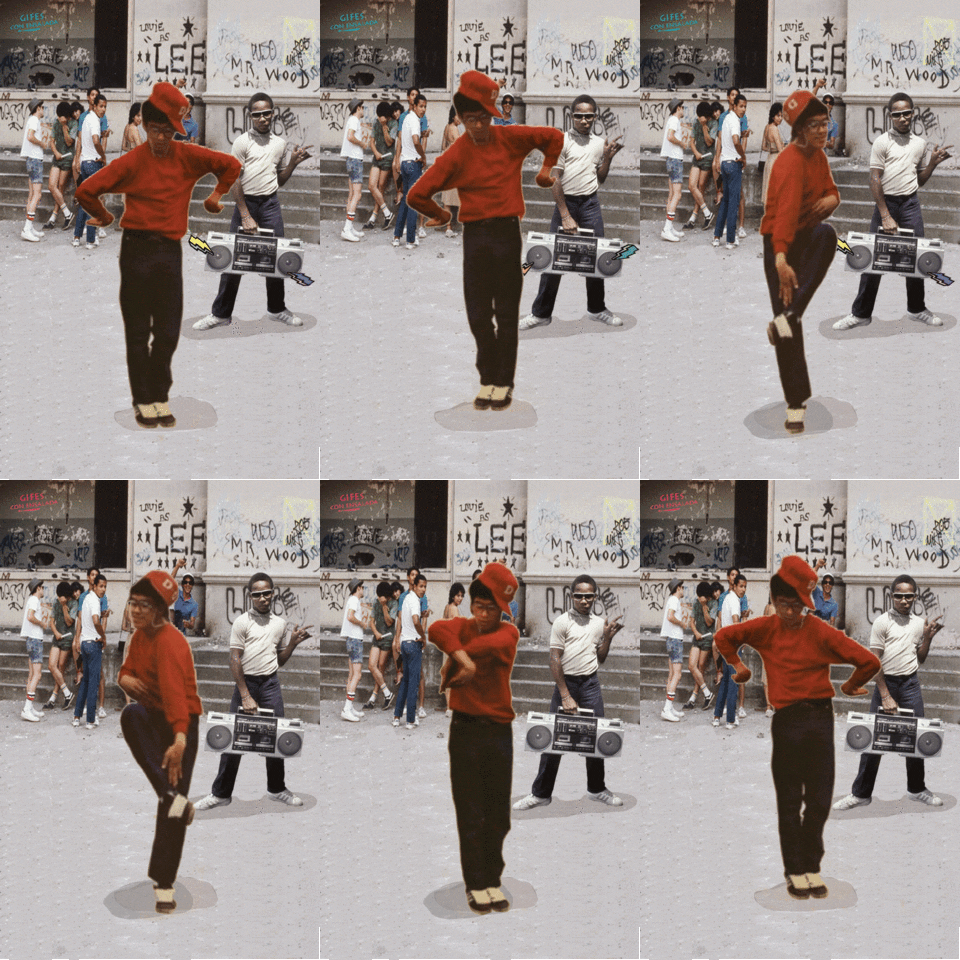
Breaking is a dynamic Street Dance rooted in 1970s African American and Puerto Rican youth culture. Defined as “physical graffiti” by historian Sally Banes, it features Top Rock, Rocking, Footwork, Drops, Freezes, and Power Moves—blending rhythm, improvisation/freestyle, as a raw physical response to break beat music.
Read more
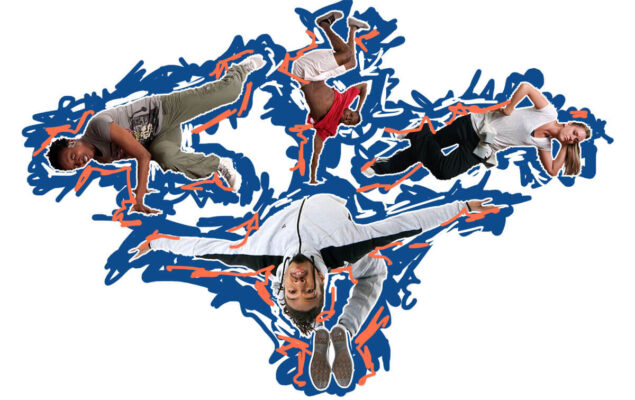
Breaking, often called breakdancing (though that term is a misnomer), originated in the early 1970s in the Bronx, New York City. It was pioneered by African-American and Latino youths and became one of the four foundational elements of Hip-hop culture.
At the center of this movement was DJ Kool Herc, who noticed that dancers reacted with heightened energy whenever the “break” in a track—where all instruments except percussion dropped out—came in. These instrumental segments-typically the drummers solo, gave dancers space to express themselves more freely and dynamically.
To cater to his crowd, Kool Herc began to extend the break (drummers solo) by switching between two copies of the same record, a method he called the “Merry-Go-Round.” This allowed dancers more time to showcase their moves, sparking the development of a new form of Street Dance: breaking. The dancers were dubbed B-boys and B-girls, short for “break-boys” and “break-girls.” The term B-boy and B-girl also referenced their geographical location as in Bronx Boy or Bronx Girl; the street slang of the time. According to B-boy Ken Swift, the term “breaking” had deeper roots in the Bronx. Vernacular, such as “breaking” referred to acting out of the ordinary or even causing trouble—“breaking” the norm. Kool Herc and his MCs adopted this term to label the dancers who would “break” (dance) during the party. So, while many believe the term comes solely from the instrumental break in the music, it also stems from the idea of breaking expectations and expressing emotion, especially anger, through movement.
Breaking is a dynamic cultural expression that channels rhythm, energy, identity, and resistance. It’s not just about flashy moves—it’s about storytelling through motion, using the body as an instrument to respond to the music and environment. Breaking was never merely a trend or style; it was a way of life and a serious art form. B-boys and B-girls didn’t just dance—they embodied breaking in every part of their lives. The music was central: tracks like “Sex Machine,” “Just Begun,” and especially “Apache” became anthems that fueled this powerful expression. The music moved through dancers’ entire bodies—not just hands and feet but head, neck, and core, embodying Hip-hop’s soul.
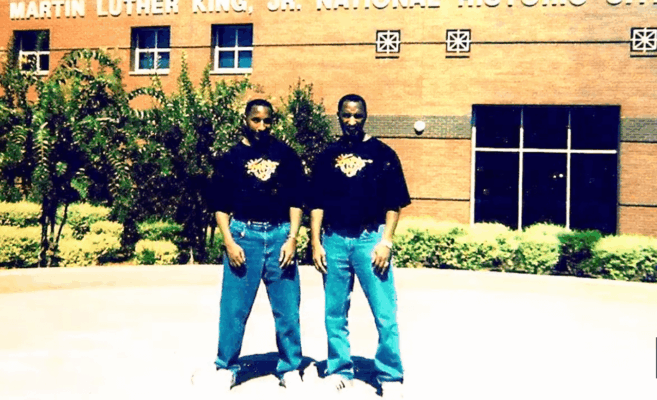
Early on, a duo known as The Twins became known as the original breakers.Dancing for Kool Herc, they were the first to go down to the ground and spin, doing so on cement floors in long coats and cigars in hand. Their performances introduced foundational breaking elements, including Rocking, Top Rock—standing movements that act as an introduction and style showcase—and footwork, which was developed by Spy of the Crazy Commanders around 1974–75. Spy’s intricate lower-body movement laid the groundwork for the dance’s evolution.
Eventually, new elements were added: “Freeze,” where dancers would pause in dramatic positions, and “Power Moves,” which brought in acrobatics and athletic feats. These fundamentals remain central to breaking today, which continues to evolve while staying rooted in its vibrant, street-born history.
GRAFFITI
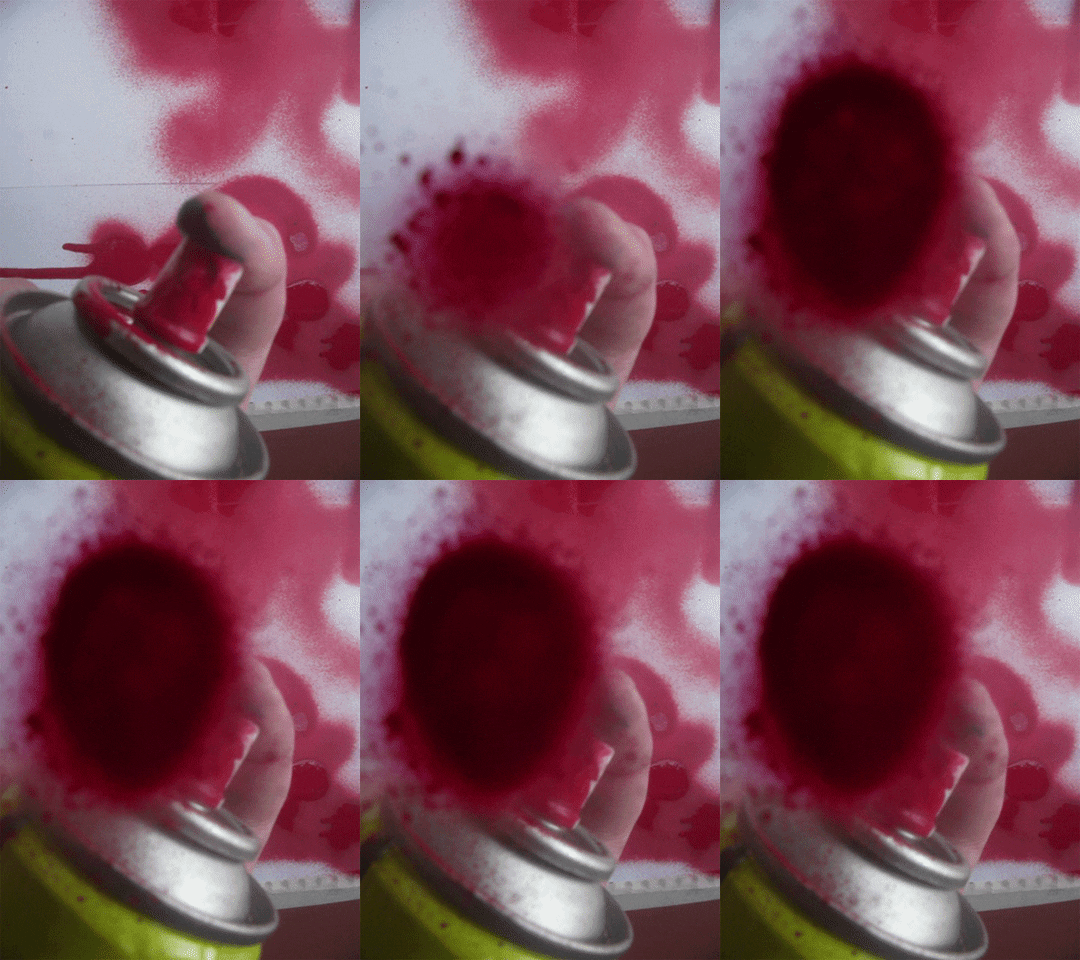
Graffiti (The Writer) is the visual element or language of Hip-hop culture, often used to convey social and political messages. Artists use walls, trains, and other surfaces as their canvas, showcasing identity and creativity.
Read more
Graffiti, the visual language of Hip-hop, emerged from the same streets that birthed breaking, DJing, and rapping. Though it predates Hip-hop as an art form, graffiti became one of the four core elements of the culture, turning city walls and subway cars into canvases for self-expression, rebellion, and identity. The roots of modern graffiti in New York City go back to the late 1960s and early 1970s, when young artists began tagging their names across the city.
Known as the King of Tags graffiti artist Cornbread (Philadelphia) is considered by most to be the first modern day graffiti artist. However, the first widely “recognized” graffiti writer was Taki 183, a Greek-American teenager from Washington Heights. He wrote his name and street number on subway cars and walls all over NYC. In 1971, The New York Times profiled him in an article titled “Taki 183 Spawns Pen Pals,” sparking a wave of youth eager to leave their own marks. Graffiti quickly evolved from simple tags to elaborate, colorful “pieces” (short for masterpieces). These were often massive works painted on subway trains, designed to travel the city and broadcast the writer’s name and style. “It was our newspaper,” said Futura, a legendary NYC graffiti artist. “We didn’t have the internet. The trains were how we went viral.” As Hip-hop began to take shape in the Bronx in the 1970s, graffiti found its place alongside DJing, MCing, and Breaking. The Zulu Nation, led by Afrika Bambaataa, recognized graffiti as a core element of the culture. He said, “We weren’t just spinning records and dancing. We were creating a whole new language — and graffiti was how we wrote it down.”
Graffiti was not just about art — it was also a political act. Amid the decaying infrastructure and systemic neglect of New York’s poorest neighborhoods, graffiti gave marginalized youth a way to claim visibility. Hip-hop historian Martha Cooper, who documented graffiti in the ’70s and ’80s, said: “These kids were invisible to society. Graffiti was their way of saying, ‘I exist.’” Despite its artistic value, graffiti was criminalized throughout the 1980s as part of NYC’s effort to “clean up” the city. Mayor Ed Koch launched a campaign to remove graffiti from subway trains, calling it “a symbol of decay.” This crackdown pushed graffiti further underground but didn’t kill it. Artists moved from trains to walls, and eventually into galleries.
By the 1990s and 2000s, graffiti began to be recognized as legitimate art. Artists like Lady Pink, Lee Quiñones, and Keith Haring transitioned into the mainstream art world, while street artists like Banksy drew global attention. Yet the connection to Hip-hop remained. “Graffiti is still about style, identity, and speaking truth to power,” said OG writer Revolt. “That’s Hip-hop.” Today, graffiti remains a vibrant part of Hip-hop culture, from mural festivals to album covers to digital street art. As KRS-One put it: “Graffiti is the written word of Hip-hop. If rap is the voice, graffiti is the pen.”
MC
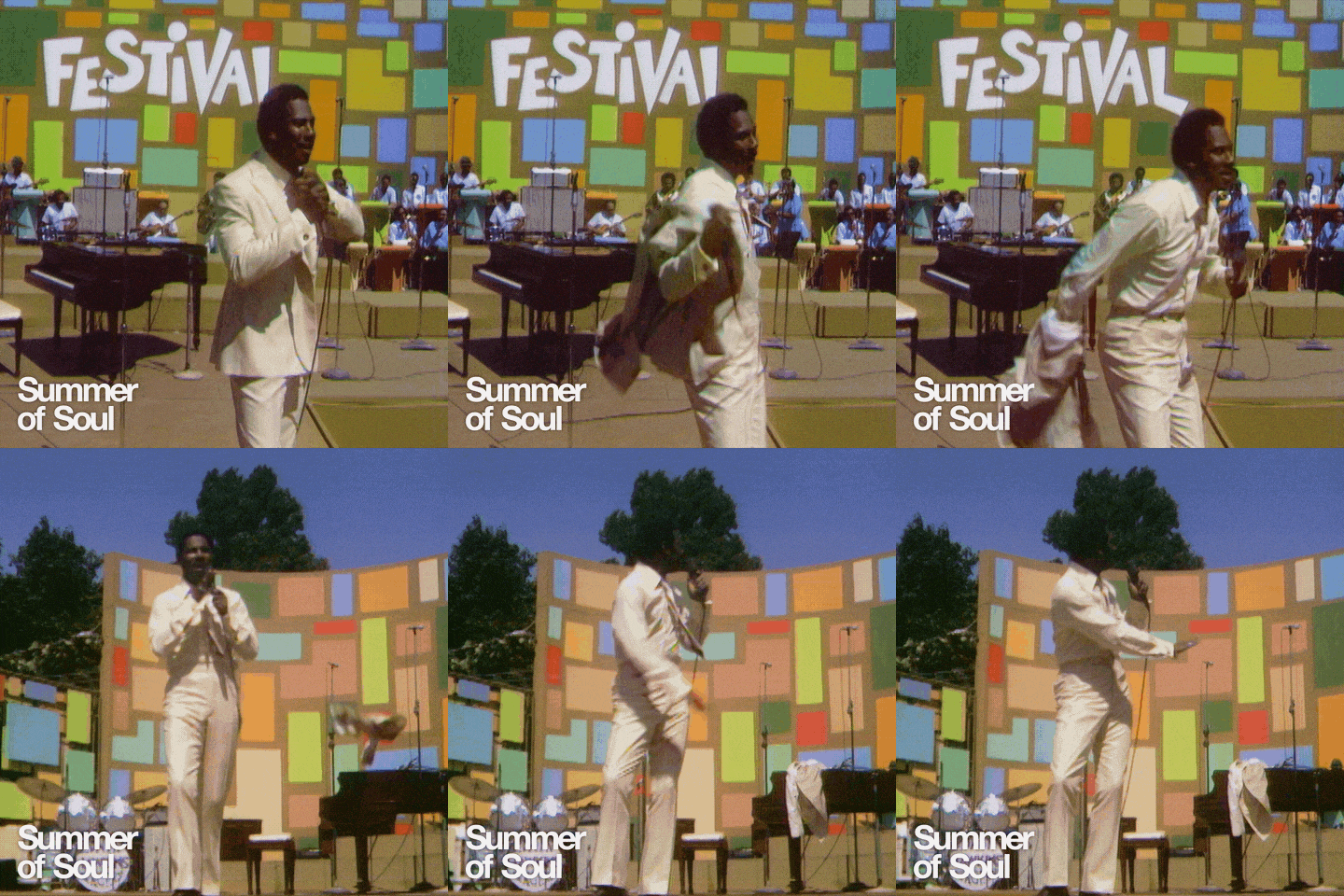
MCing, or rapping, is the rhythmic spoken delivery of rhymes and wordplay over a beat. Emerging in 1970s block parties, the MC evolved from hyping the crowd to becoming Hip-hop’s vocal storyteller — expressing identity, struggle, and culture through powerful lyrics and lyrical skill.
Read more
The MC, or Master of Ceremonies, has evolved from party host to poet, storyteller, and activist — becoming the voice of Hip-hop. While the DJ laid the sonic foundation, it was the MC who brought energy to the mic, hyping the crowd and eventually commanding the spotlight with lyrical prowess.
Hip-hop’s earliest MCs emerged in the South Bronx during the 1970s, where DJs like Kool Herc threw block parties. Originally, the MC’s job was to support the DJ — to hype up the crowd, shout out partygoers, and keep the vibe alive. As Herc recalled, “The music spoke for itself, but people wanted someone to guide them through it.” Early MCs like Coke La Rock, often cited as the first MC, delivered rhymes like simple chants: “There’s not a man that can’t be thrown / A horse that can’t be rode.” As the culture grew, so did the complexity of MCing. The late 1970s and early 1980s saw MCs shift from crowd hype to lyrical expression. MC’s like Kool Moe Dee and groups like the Cold Crush Brothers and Grandmaster Flash and the Furious Five honed their storytelling, wordplay, and social commentary lyrics In 1982, Melle Mel delivered what’s often called the first political rap with “The Message”: “Don’t push me ’cause I’m close to the edge / I’m trying not to lose my head.” Hip-hop historian Jeff Chang called this moment “the Big Bang of conscious rap.”
As Hip-hop entered the mainstream in the mid-1980s, the MC became its public face. Run-D.M.C. brought a hard-edged, streetwise style that contrasted sharply with disco-era party rhymes. “We were saying what we lived,” said DMC, “not just what people wanted to hear at a party.” Their stripped-down beats and aggressive delivery defined the East Coast sound and set the stage for rap’s commercial breakthrough. By the late ’80s and ’90s, MCing had become a lyrical arms race. Artists like Rakim, Big Daddy Kane, and KRS-One introduced complex rhyme schemes, philosophical depth, and verbal acrobatics. Rakim famously said, “I don’t write rhymes — I write science.” His smooth delivery and internal rhyme patterns set a new lyrical standard, shifting the MC’s role from entertainer to lyricist.
In the 1990s and beyond, regional styles emerged — from Nas’s poetic street narratives in New York to Tupac’s emotional depth and Biggie’s smooth storytelling. The MC was no longer just a voice of the party, but a voice of the people. “The MC became the ghetto journalist,” said KRS-One. “We told the stories nobody else would.” Today, MCs remain central to Hip-hop culture, from battle rap stages to Grammy podiums. Artists like Kendrick Lamar, J. Cole, and Rapsody carry the torch with messages that balance rhythm, resistance, and art. As Chuck D of Public Enemy once said: “Rap is black America’s CNN.”
From moving the crowd, being the mic controller to becoming the cultural ambassador, the MC has transformed into one of the most powerful storytellers in modern music to date — a lyrical force that gave Hip-hop its soul, depth and voice.
DJ
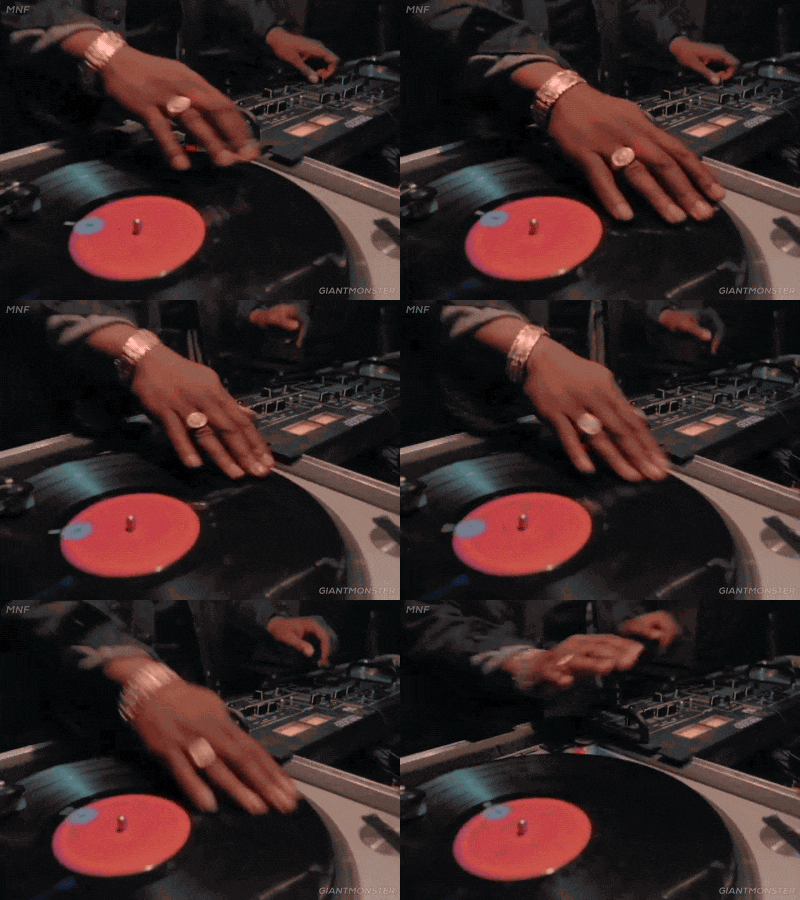
DJing is often considered the foundation of Hip-hop culture. Emerging in the South Bronx in the 1970s, DJs used turntables as musical instruments to create new sounds — crafting beats, scratches, and samples that formed Hip-hop’s backbone. Pioneers like Kool Herc set the rhythm for emcees, breakers, and a cultural movement.
Read more
DJing (turntablism) is the backbone of Hip-hop culture. Before emcees grabbed the mic and before breakers hit the floor, it was the DJ who set the stage, quite literally, for the birth of an entire cultural movement. The roots of DJing in Hip-hop trace back to the early 1970s in the South Bronx, a time when poverty and gang violence dominated the landscape. Amid this turmoil, young people found creative expression through turntables, transforming record players (component set) into instruments of innovation. One of the most pivotal figures in this transformation was DJ Kool Herc (b. Clive Campbell in 1955 in Kingston, Jamaica) who is widely recognized as the “Father of Hip-hop.” In 1973, Herc introduced the concept of the “breakbeat” during a back-to-school party at 1520 Sedgwick Avenue that was thrown by his sister, Cindy. He would isolate and extend the instrumental breaks of funk and soul records — the parts dancers loved most — by using two turntables. “I was noticing people used to wait for certain parts of the record to dance,” Kool Herc explained in an interview. “I said, ‘I wonder how it would be if I put them all together?’” This technique, later dubbed “the Merry-Go-Round,” laid the foundation for breaking and MCing alike.
As Herc’s parties gained popularity, other DJs began refining the craft. Grandmaster Flash took Herc’s techniques further by developing precise methods of cueing and cutting records. “Flash turned DJing into a science,” said Hip-hop historian Jeff Chang. “He turned it into something that could be learned, practiced, and elevated.” Flash’s innovations, such as backspinning and punch phrasing, gave DJs more control and creativity, effectively turning the turntable into a percussive instrument.
Afrika Bambaataa, another key figure, used DJing as a form of community organization. Through his Zulu Nation, Bambaataa pushed the idea that Hip-hop could be a tool for peace and unity. He famously said, “Hip-hop saved a lot of lives. We were using it to stop the violence.” Bambaataa’s eclectic sets, blending electro, funk, soul, and rock, expanded the sonic palette of Hip-hop and helped define its genre-fluid identity.
As Hip-hop gained mainstream traction in the 1980s, the role of the DJ began to shift. With the rise of the MC and radio-friendly rap songs, the DJ sometimes took a backseat. However, their legacy was far from forgotten. Legendary DJs like Jam Master Jay (Run-D.M.C.) and DJ Premier (Gang Starr) maintained the art form’s presence in classic Hip-hop tracks. “Without the DJ, there is no Hip-hop,” DJ Premier once stated. “We were the first. We created the sound.” In recent decades, turntablism has emerged as a respected art, with DJs like Qbert and Mix Master Mike pushing technical boundaries. DJ battles such as the DMC World Championships celebrate the skill, showmanship, and innovation of modern DJs, keeping the culture alive. From block parties in the Bronx to global stages, DJing remains a core element of Hip-hop. As Grand Wizzard Theodore, inventor of the scratch, put it: “The DJ is the heartbeat of Hip-hop. Everything else builds off that beat.”